
In the rapidly evolving world of Indian architecture and interior design, the demand for high-performance building materials has reached an all-time high. Among these, Stone Plastic Composite (SPC) flooring has emerged as the definitive leader, largely replacing traditional materials like laminate, ceramic tiles, and even marble in premium residential and commercial projects.
As India’s leading SPC Flooring manufacturer and exporter, Floorrex® (by Baba Flooring Pvt Ltd) brings you this exhaustive technical analysis to help you understand the “why” and “how” behind this revolutionary flooring solution.
1. What is the SPC Flooring Full Form?
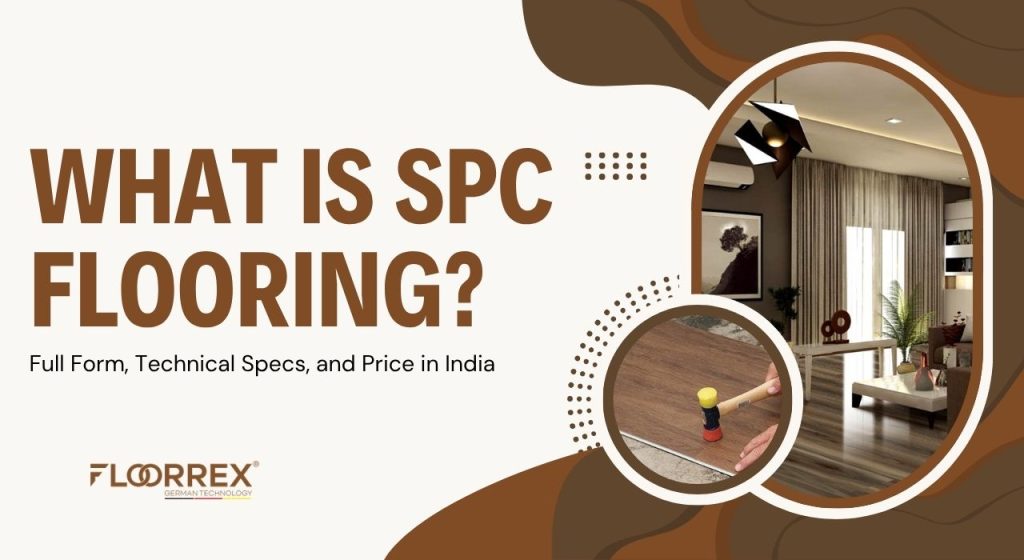
The SPC Flooring full form is Stone Plastic Composite. In some global engineering circles, it is also referred to as Stone Polymer Composite.
To understand the product, you must look at its chemistry. Unlike standard luxury vinyl tiles (LVT) which are flexible and composed mostly of PVC, SPC is a rigid core luxury vinyl. It is created by a sophisticated fusion of:
- Natural Limestone (Calcium Carbonate): Providing the “Stone” element (approx. 60-70%).
- Polyvinyl Chloride (PVC): Providing the “Plastic” binder.
- Stabilizers: Ensuring the product remains inert and non-reactive to heat and moisture.
The result is a material that possesses the structural integrity of stone while retaining the lightweight and versatile properties of high-grade polymers.
2. Technical Anatomy: The 5-Layer Engineering
At Floorrex®, we utilize a multi-layer extrusion process. Each layer serves a specific functional purpose to ensure the floor lasts for decades.
A. The UV Shield (Surface Protection)
The topmost layer is a dual-coat UV-cured lacquer. This isn’t just for shine; it acts as a filter against ultraviolet rays (preventing discoloration) and provides a non-porous surface that resists microbes and stains.
B. The Wear Layer (The Armor)
This transparent layer determines the floor’s “Usage Class.” In 2026, standard residential wear layers are 0.3mm, while heavy-duty commercial grades use 0.55mm to 0.7mm. This layer protects the decorative print from scratches, scuffs, and high foot traffic.
C. The HD Decorative Film (Aesthetics)
Using 4K high-definition printing, this layer mimics natural materials. Whether it’s the deep grains of Royal Oak or the polished veins of Statuario Marble, the visual depth is achieved here. Advanced EIR (Embossed-in-Register) technology ensures that the texture of the floor matches the visual grain of the wood.
D. The SPC Rigid Core (The Foundation)
This is where the SPC Flooring full form truly matters. The core is waterproof. It is so dense (averaging 2100 kg/m³) that it remains dimensionally stable. While wood expands in humidity and stone cracks in extreme cold, the SPC core remains unchanged.
E. Integrated Underlayment (Acoustics)
Most premium planks come with a pre-attached IXPE (Irradiated Cross-linked Polyethylene) or EVA foam. This serves two purposes:
- Sound Insulation: It reduces “walking noise” (impact sound) by up to 20 decibels.
- Comfort: It provides a slight cushion, reducing leg fatigue for those standing for long hours.
3. Detailed Technical Specifications
For architects and contractors, the technical data sheet is the most important document. Here are the 2026 industry standards for high-quality SPC:
| Specification | Metric / Rating | Why it Matters |
| Density | 1900 – 2100 kg/m³ | Prevents dents from heavy furniture. |
| Fire Rating | Bfl-s1 (EN 13501-1) | Fire retardant and low smoke emission. |
| Slip Resistance | R10 / DS Rating | Prevents slipping, especially in kitchens/bathrooms. |
| Formaldehyde | E1 / E0 Class | Zero toxic emissions; safe for children and pets. |
| Locking Strength | > 1.5 kN/m | Ensures planks don’t pull apart over time. |
| Abrasion Class | AC3 to AC5 | Measures the durability of the wear layer. |
4. Comprehensive SPC Flooring Prices in India (2026)
One of the primary drivers of SPC’s popularity is its cost-effectiveness compared to natural stone. However, SPC flooring prices are not a single number; they are a range determined by technical quality and logistical factors.
Market Price Range (Material Only)
- Residential Grade (3.5mm – 4mm): ₹85 to ₹115 per sq. ft.
- Standard Project Grade (5mm): ₹120 to ₹160 per sq. ft.
- Premium / Heavy Commercial (6mm – 7mm): ₹170 to ₹260+ per sq. ft.
Factors Influencing the Price:
- Core Composition: Planks made from “Virgin PVC” are more expensive but more stable than those using recycled materials. At Floorrex®, we prioritize virgin material for health and longevity.
- Unilin Click-Lock System: Patented systems like Unilin ensure a tighter fit but add a small premium to the cost.
- Geography: Prices in metros (Delhi, Mumbai, Bangalore) may vary slightly based on local transport and warehouse logistics.
Estimated “All-In” Costing
When budgeting, you must look beyond the material price.
- Installation Labor: ₹15 – ₹30 per sq. ft.
- Accessories (Skirting/T-Profile): ₹50 – ₹100 per running foot.
- GST: Usually 18% in the flooring category.
5. Comparative Analysis: SPC vs. The Competition
To understand the value of Stone Plastic Composite, we must compare it to what it is replacing.
SPC vs. Italian Marble
Marble is beautiful, but porous and expensive. SPC offers the same look for 30% of the price, requires zero polishing, and can be installed in a single day.
SPC vs. Laminate Flooring
Laminate uses an HDF (wood fiber) core, which swells when it touches water. SPC is 100% waterproof, making it suitable for wet-mopping—a necessity in Indian households.
SPC vs. Vitrified Tiles
Tiles are cold, hard, and prone to cracking. SPC is warmer underfoot, easier on the joints, and features “no-grout” installation, meaning you don’t have to deal with dirty cement lines.
6. Installation & Maintenance: The Expert Guide
The beauty of SPC is the Floating Floor installation.
Professional Installation Tips:
- Subfloor Leveling: The floor must be level within 3mm over a 2-meter radius. Any major bumps will cause the click-locks to break over time.
- Expansion Gaps: Even though SPC is stable, a 5mm to 8mm gap must be left near the walls to allow for the natural movement of the building structure.
- Acclimatization: We recommend keeping the planks in the room for 24 hours before installation to let them adjust to the ambient temperature.
Maintenance for Longevity:
- Daily: Use a soft-bristle broom or vacuum (without a beater bar).
- Weekly: Damp mop with a pH-neutral cleaner. Avoid harsh acids or bleach.
- Protection: Use felt pads under heavy furniture legs and avoid dragging appliances across the floor.
7. Why Floorrex® is the Leader in India
As the largest manufacturer under the Baba Flooring Pvt Ltd umbrella, Floorrex® doesn’t just sell floors; we manufacture them from the ground up.
- Vertical Integration: We own our limestone quarries, ensuring the highest quality calcium carbonate goes into our SPC core.
- German Engineering: Our production lines use the latest Unilin technology for perfect click-locking and thickness consistency.
- Sustainability: Our products are recyclable and free from harmful heavy metals.
Conclusion
Understanding the SPC Flooring full form and the shifting landscape of SPC flooring prices allows you to make an informed investment. Whether you are building a quiet home sanctuary or a high-traffic retail outlet, SPC offers a blend of durability, aesthetics, and hygiene that is simply unmatched in 2026.
This guide was compiled by Floorrex®, India’s leading SPC Flooring manufacturer.
You can explore our SPC Flooring Collection for a wide range of premium textures, colors, and finishes designed to elevate your space.
FAQs
1. What is SPC flooring?
SPC flooring (Stone Plastic Composite) is a rigid core luxury vinyl flooring made from limestone and PVC. It is known for its waterproof nature, high durability, and resistance to wear, making it ideal for both residential and commercial spaces.
2. What is the full form of SPC flooring?
The full form of SPC flooring is Stone Plastic Composite. It refers to the combination of natural stone (limestone) and plastic polymers used to create a strong, stable, and long-lasting flooring material.
3. What is the price of SPC flooring in India?
SPC flooring price in India typically ranges from ₹85 to ₹260+ per sq. ft., depending on thickness, wear layer, and quality. Premium commercial-grade SPC flooring tends to be more expensive than standard residential options.
4. Is SPC flooring better than tiles or laminate?
Yes, SPC flooring is often better than tiles and laminate because it is waterproof, more comfortable underfoot, and easier to install. Unlike laminate, it does not swell with moisture, and unlike tiles, it does not crack easily or require grout maintenance.

The Floorrex Team shares expert advice on SPC flooring in India to help readers make informed choices and find durable, stylish, and practical flooring solutions for every space.